The Johnson Model of Intervention
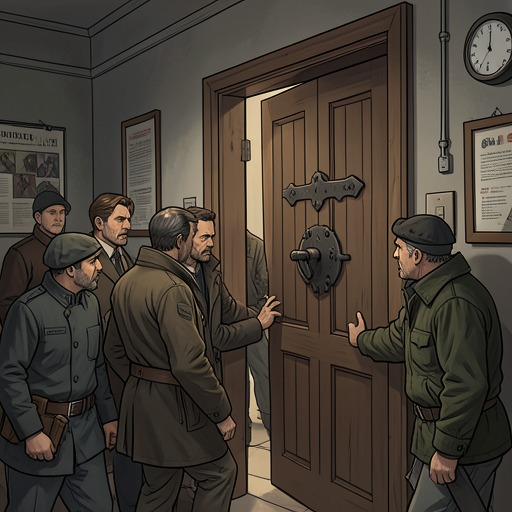
Where'd You Go BernadetteThe Johnson Model of Intervention is an ambush-style method for confronting a person with concerns about their behavior and urging them to accept treatment. In Bernadette Fox’s case, it is not simply a clinical technique: it becomes the organizing plan for a family intervention shaped by suspected prescription-drug misuse, secrecy surrounding an FBI file, and a dispute over how far care may go before it becomes coercion.
Definition and Selection
Madrona Hill had been moving away from the Johnson Model in favor of the Miller–Rollnick motivational approach. Dr. Janelle Kurtz describes the latter as more inclusive and reports that studies had found it more effective. The contrast matters: the Johnson approach depends on a planned, forceful confrontation, whereas the alternative is presented as more collaborative. The family’s choice therefore was not the clinic’s ordinary preference, but an exception made under particular circumstances.
Those circumstances included the FBI’s requirement for secrecy. Dr. Kurtz presented Bernadette’s background to Drs. Mink and Crabtree, specialists in drug interventions. They agreed that the substance-abuse component made an intervention appropriate. Although Dr. Kurtz was not formally trained to conduct drug interventions, she decided to lead this one herself because of the unusual circumstances. The plan thus joins professional consultation to an explicitly exceptional decision: the model is selected not because it is Madrona Hill’s favored method, but because secrecy was understood to rule out the more inclusive approach.
The Planned Procedure
Before the intervention, Dr. Kurtz and Elgin Branch met at Dr. Mink’s Seattle office. Dr. Mink, who had conducted many Johnson-style interventions in the 1980s and 1990s, walked them through the procedure. The steps recorded begin with forcefully presenting reality to the patient. Family members then express their love in their own words and detail the damage they believe the patient has caused. The account next records that the patient is offered an opportunity to seek treatment voluntarily, followed by immediate transfer to a treatment center.
The procedure combines affirmation with accusation and a decision with a deadline. Love is to be stated personally, but the patient is also to hear a collective account of harm; voluntary treatment is the desired choice, yet transfer is built into the plan. Dr. Kurtz says the hope is that Bernadette will acknowledge her illness and check herself into Madrona Hill voluntarily. That hope distinguishes the intended intervention from an involuntary hold, without removing the pressure created by the ambush-style format or the expectation of immediate treatment.
The Medical and Legal Context
The concerns informing the plan were serious but not presented as a settled diagnosis. Elgin had found a medicine cabinet crowded with prescription bottles from multiple doctors, including prescriptions for Xanax, Klonopin, Ambien, Halcion, and trazodone; all the bottles were empty. The investigative material also described prescription-medicine hoarding, extreme anxiety, grandiosity, and suicidal thoughts. Elgin believed the FBI file supplied adequate proof for inpatient treatment, while Dr. Kurtz remained concerned about his determination to seek an involuntary hold. He told her that he wanted Bernadette to receive the best care possible.
Washington’s Involuntary Treatment Act sets a separate threshold for detention. As Dr. Kurtz explains it, a County Designated Mental Health Professional must evaluate the person and determine that, because of psychiatric illness, the person is an imminent danger to themselves, others, or property. The process begins with emergency assessment; if the person refuses treatment after being assessed as meeting the threat standard, civil liberties may be suspended and transfer to a state-licensed psychiatric hospital may follow for up to seventy-two hours, after which the courts become involved. Suspicion, distress, or a family’s conviction alone is not described as equivalent to that statutory determination.
Dr. Kurtz’s caution also reflects the consequences of using that legal route. Madrona Hill, on Orcas Island, provides inpatient and residential treatment as well as the state’s only private psychiatric emergency room. From that position, she witnesses involuntary commitment bringing families into conflict and drawing in police, lawyers, and judges; the process can also enter public records visible to future employers and financial institutions. She therefore argues that, because the costs may be substantial, involuntary commitment should follow only after other options have been exhausted. Her account makes clear why a planned intervention and a legally authorized hold must not be treated as the same action.
Tensions and Significance
The Johnson Model exposes the gap between a family’s wish to secure help and the patient’s control over whether to accept it. The plan’s stated endpoint is voluntary admission, but its forceful presentation of reality and immediate-transfer stage make refusal consequential. Meanwhile, the legal framework described by Dr. Kurtz demands an assessment of imminent danger, not merely agreement with the family’s interpretation of the evidence. The story places these different standards alongside one another without making them interchangeable.
The plan also arises amid competing accounts of what Bernadette needs. Elgin sees the file and the empty medication bottles as grounds for inpatient care; Dr. Kurtz offers local psychiatrists and questions his resolve to pursue involuntary treatment. In a later conversation, she proposes that she and Bernadette work together over several weeks, while Bernadette mistakes the suggestion for an offer to join the family’s trip. That exchange underscores how far therapeutic intention and Bernadette’s understanding of the situation can diverge. The intervention model is therefore significant not as a guaranteed remedy, but as the framework through which the family and clinicians try to turn disputed evidence into an immediate decision about care.